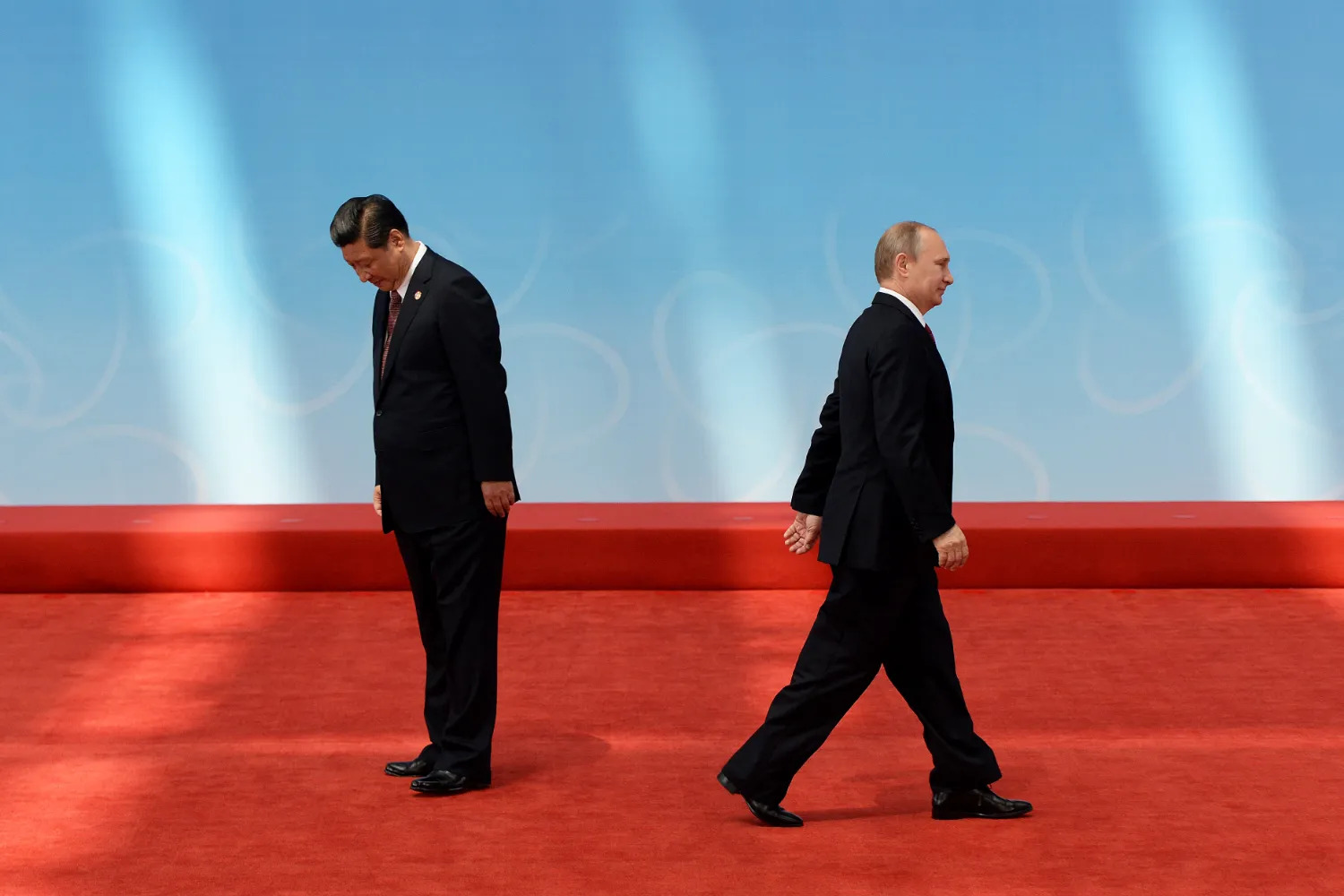
The relationship between Chinese President Xi Jinping and Russian President Vladimir Putin has become an important feature of international politics. Both governments have criticised American influence and supported changes to the existing international order. Their cooperation has expanded across trade, defence, technology and diplomacy, while both countries have strengthened their involvement in organisations such as BRICS and the Shanghai Cooperation Organisation.
For Washington, the partnership complicates efforts to manage security challenges in Europe and the Indo-Pacific simultaneously. China has helped sustain Russia's economy through energy purchases and commercial ties, while Russian and Chinese military cooperation has raised concerns among Western governments. Their alignment also gives both countries additional diplomatic options when responding to American sanctions and other forms of pressure.
In an analysis published by Foreign Policy on October 8, 2026, Daniel S. Hamilton and Angela Stent argue that the United States should focus less on attempting to separate Beijing and Moscow completely and more on making their partnership harder to maintain. Their approach centres on identifying differences between the two governments, strengthening cooperation with allies and applying pressure where their interests conflict.
One potential instrument is economic policy. The authors argue that Washington could increase the costs faced by China for supporting Russia's war against Ukraine. They point to legislation passed in September 2026 that authorises tariffs of up to 100% on certain countries purchasing substantial quantities of Russian oil or gas or helping evade sanctions. The effectiveness of such measures would depend on how they were implemented, their effects on energy markets and the responses of the countries involved.
The relationship between Beijing and Moscow also contains areas of strategic unease. Russia's growing economic dependence on China has raised concerns about the balance of influence between the two countries. Chinese manufacturers have expanded their technological capabilities, while Russia has faced restrictions on access to Western finance, technology and markets. These conditions have increased China's relative economic weight within the partnership.
Competition extends into Central Asia, the Arctic and Africa. Russia has historically regarded Central Asia as an important sphere of influence, while China's economic expansion has strengthened its regional presence. In the Arctic, the two countries cooperate in some areas but also have differing interests concerning resources, shipping routes and strategic access. Their activities in Africa likewise reflect a mixture of cooperation and competition rather than complete alignment.
These differences do not necessarily mean that the partnership is close to collapse. Both governments have reasons to manage disagreements and preserve cooperation, particularly when they perceive common challenges from the United States and its allies. Strategic rivalry between partners can remain contained when the benefits of working together outweigh the costs of their differences.
The authors therefore emphasise the importance of American alliances. Coordinated economic, diplomatic, technological and defence policies could give Washington and its partners greater influence than unilateral measures alone. Cooperation across Europe and the Indo-Pacific would also help address the connections between security challenges in different regions.
Such coordination, however, requires sustained political commitment. Disagreements among allies over trade, defence spending and relations with China can weaken collective responses. Rebuilding confidence and establishing shared priorities would be essential to making a coordinated strategy credible.
The China-Russia partnership is unlikely to be shaped by a single diplomatic initiative or economic measure. Its future will depend on overlapping interests, domestic pressures and developments across several regions. For the United States, the central challenge is to respond without overestimating either the unity of the partnership or the ease with which it can be disrupted. A sustained approach combining allied cooperation, targeted pressure and careful diplomacy offers a framework for managing the relationship's strategic consequences.