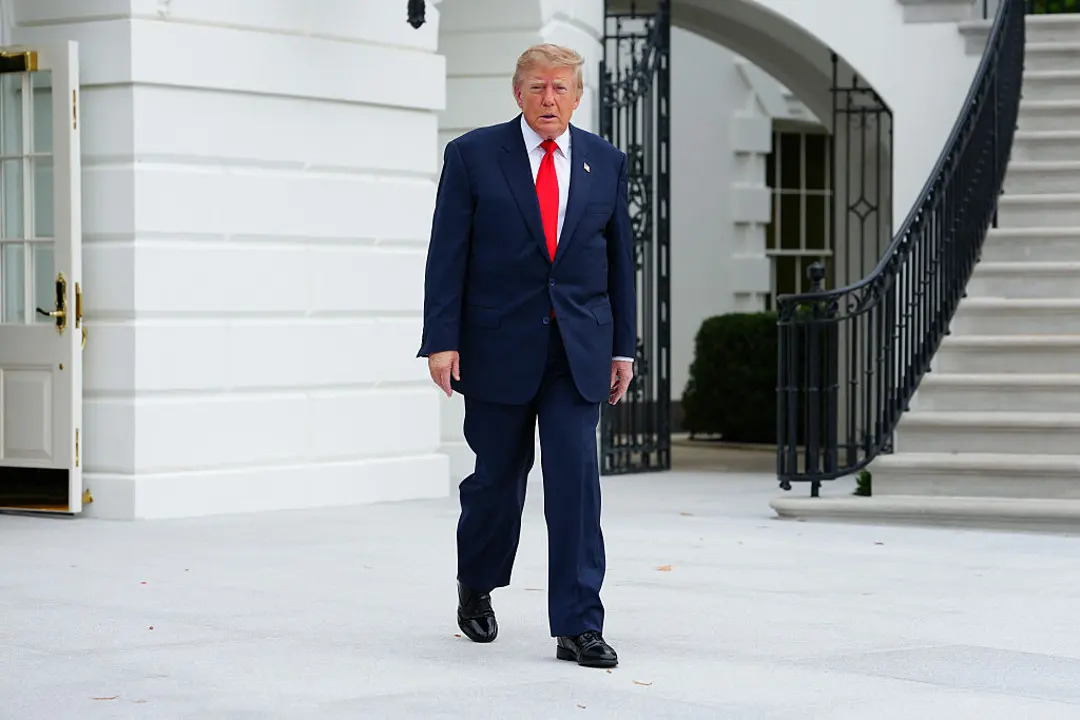
On October 10, 2026, Trump told reporters outside the White House that the United States might join Saudi Arabia’s strikes against the Houthis, an Iran-backed armed group based in Yemen. Responding to questions about the latest attacks, he said Washington would assess the situation before making a decision, adding that the administration could act quickly.
His remarks followed a missile strike on the complex housing Terminals 3 and 4 at King Khalid International Airport in Riyadh. According to Saudi Arabia’s General Authority of Civil Aviation, the attack killed 12 people and injured more than 300. Airport operations were suspended while authorities assessed the damage, and flight-tracking data indicated hundreds of cancellations and disruptions.
The strike formed part of a wider series of attacks targeting Saudi airports over the preceding week. Earlier incidents reportedly killed people at Abha International Airport and King Khalid International Airport. The victims included Saudi citizens and foreign nationals, highlighting the risks faced by civilians and international travellers as the conflict intensifies.
The latest escalation followed an October 4 announcement by Yemen’s Saudi-backed government of a major offensive against the Houthis. The group has repeatedly threatened Saudi targets and warned airlines and passengers to avoid Saudi airspace, which it described as an area of military operations. Houthi representatives have also identified Saudi oil facilities as potential targets.
Saudi officials have condemned the attacks. Major General Turki al-Malki, a spokesperson for the Saudi-led coalition fighting the Houthis, warned that the strikes would not go unanswered. Meanwhile, the US Embassy in Riyadh issued a security alert advising American citizens to avoid the airport and surrounding areas and to monitor potential flight cancellations and airspace restrictions.
The conflict has broader strategic implications because of Yemen’s position near important international shipping routes. The Bab el-Mandeb Strait connects the Red Sea with the Gulf of Aden and serves as a key passage for commercial vessels travelling between Europe and Asia. Any disruption could complicate maritime trade and intensify pressure on global energy markets, particularly as shipping through the Strait of Hormuz is already facing disruption, according to the supplied report.
_1791714025.jpg)
Tensions have also grown over territorial control around the Red Sea. The Houthis have claimed advances involving the port city of Mokha and Perim Island, locations with strategic significance near the Bab el-Mandeb. Saudi-backed forces have reportedly claimed to retake these areas, although the account says those claims have not been independently verified and control remains disputed.
Saudi Crown Prince Mohammed bin Salman reportedly urged Trump in September to take action against the Houthis as concerns grew over the security of regional shipping routes. Washington had previously indicated that it did not intend to enter the conflict directly. Trump’s latest comments suggest that the administration is reconsidering its options following the airport attacks.
Any decision to participate in Saudi strikes would carry significant military and diplomatic consequences. It could strengthen coordination between Washington and Riyadh while increasing the risk of retaliation against American interests in the region. The move would also come amid a wider confrontation involving Iran, with public opinion in the United States presenting an additional political consideration.
For now, Trump has not confirmed that American forces will join the campaign. The immediate priorities remain assessing the damage, protecting civilian aviation and determining how the attacks will influence regional military decisions. Whether Washington chooses direct intervention or continued support for its Saudi ally could shape the next phase of the conflict and its consequences for security across the Middle East.