Art has often served as more than a reflection of its time. In periods of political upheaval, it can become a means of protest, a record of suffering and a way to mobilize people around shared ideals. British antifascist art of the 1930s and 1940s emerged from precisely this atmosphere, as artists responded to unemployment, political extremism, the Spanish Civil War and the growing threat of another European conflict. A major survey revisits this period, examining how creative expression became intertwined with political conviction and collective action.
At the center of this history is the Artists International Association, established in 1933 as a radical, broadly antifascist organization with strong pacifist currents. The association brought together artists who believed that art could contribute to a wider struggle against authoritarianism and social injustice. Its members used exhibitions, illustrations, posters and public campaigns to connect artistic practice with the political realities confronting ordinary people.
The survey highlights 11 important figures associated with this movement, presenting their work alongside photographs, documents and historical ephemera. Together, these materials reconstruct a period when artists frequently regarded political engagement as a responsibility rather than an optional extension of their profession.
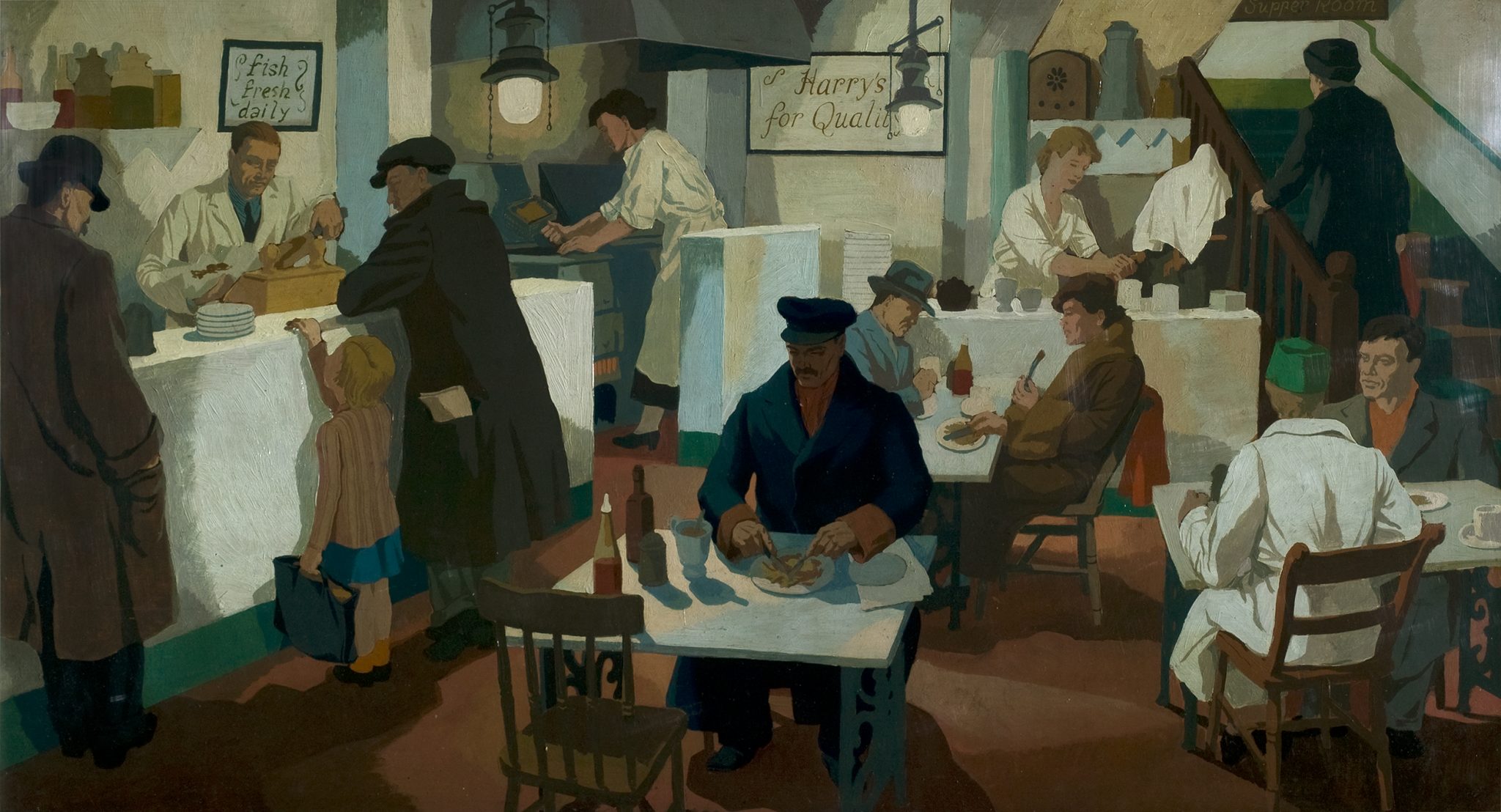
Cliff Rowe was among the most provocative voices in this environment. His painting The Struggle Between the Unemployed and the Police Forces depicts a confrontation between protesters demanding relief from hunger and the authorities. Although conceived in Moscow, the scene is set in London, turning an urban demonstration into a dramatic image of economic hardship and social conflict. Rowe’s later work, The Fried Fish Shop, adopted a more unusual approach to political commentary, while his satirical depiction of King George V transformed a royal celebration into an indictment of war, unemployment and poverty.
Pearl Binder approached political art through a different visual language. Her lithographs recorded encounters and observations from her travels, combining vivid imagery with an interest in everyday social life. Her work demonstrates how political art could operate through personal experience and cultural observation as well as direct confrontation. The contrast between her lively prints and the more aggressive imagery of other artists reveals the diversity of approaches within the antifascist movement.
The outbreak of the Spanish Civil War intensified the urgency of this artistic activism. Felicia Browne, an artist who volunteered to fight against Franco’s forces, was killed near Zaragoza. Her recovered sketchbook contains concise drawings of fellow combatants, preserving moments of a conflict that became an international symbol of resistance to fascism. Browne’s life illustrates the extent to which some artists moved beyond representing political struggle to participating in it directly.
James Boswell also confronted the threat of war through unsettling visual narratives. His series The Fall of London imagined a city devastated by catastrophe, with scenes of derailed trains, crowds surrounding barricades and figures facing execution. These images anticipated the fear of aerial bombardment that would become a defining feature of wartime experience. His sharp caricatures of the privileged classes further exposed the social divisions that shaped political life.
Yet the exhibition is not confined to scenes of violence and confrontation. Margaret Fitton’s paintings offer quieter domestic subjects, including Rhubarb Pie, whose carefully observed interior conveys a sense of ordinary life and nostalgia. Such works provide a counterpoint to the movement’s more urgent political imagery, reminding viewers that the values artists sought to defend included everyday peace, community and human dignity.
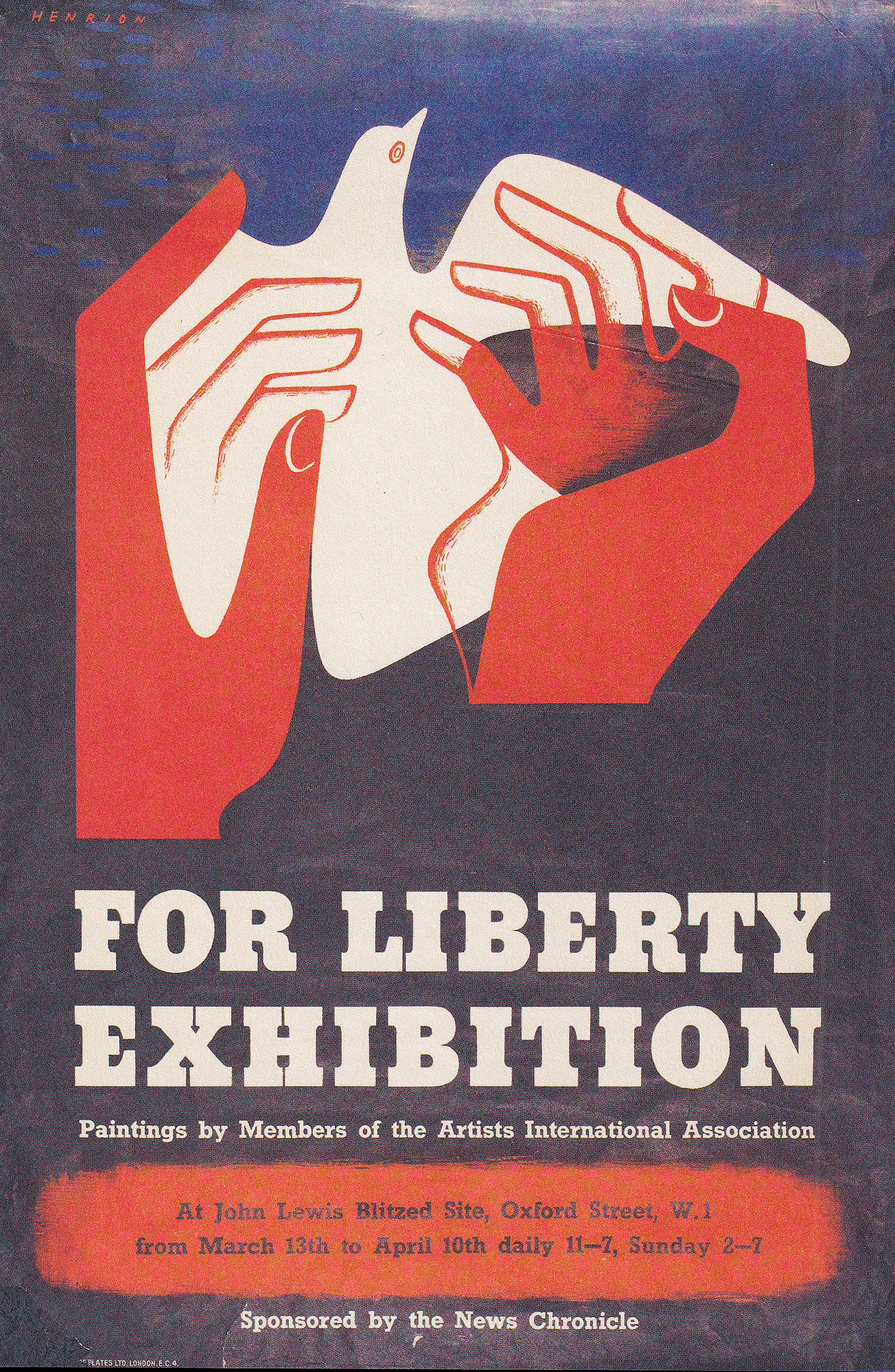
As the Second World War progressed, political art also became part of public communication. Poster designers such as FHK Henrion used graphic clarity and direct messaging to promote collective responsibility and encourage public participation. Government campaigns concerning rationing and resource conservation translated wartime priorities into memorable visual statements, demonstrating how design could influence behaviour beyond galleries and exhibitions.
The survey’s historical perspective carries contemporary relevance. Its works document a period when political artists faced difficult choices about how to respond to rising extremism, economic insecurity and the possibility of widespread conflict. Their methods ranged from satire and documentary observation to direct participation in political movements, but they shared a conviction that creative work could help shape public consciousness.
Ultimately, British antifascist art offers a compelling account of creativity under pressure. It shows how artists used their skills to challenge authority, record suffering and imagine alternatives to violence and oppression. Their legacy raises a continuing question about the responsibilities of artists in times of political uncertainty and the determination required to defend democratic values. The exhibition’s significance lies not only in preserving these historical works, but also in reminding audiences that cultural resistance depends on sustained effort, collective support and the willingness to speak when silence becomes easier.